Showing posts with label lynn taylor artist. Show all posts

Thursday, June 6, 2019

Bannockburn Retreat with COOTS Group


I have been using Instagram as my social media platform of late, I like the visual nature and speed of it. This year has involved a lot of art projects and travel which has been immensely fulfilling and exciting, so I have had little time to write up a post. 


I've just returned from teaching a workshop with the COOTS group. COOTS, what does that stand for I wondered after I was approached by the group to facilitate a workshop. One of the things about teaching different groups is it is good to make the workshop fit the needs of the participants so I like to have communications and a bit of prior knowledge. Google told me that Coots are small American water birds but that didn't help any! No indeed, the acronym stands for Central Otago Outside The Square, hence the meeting place for the retreat being in Bannockburn, a central location for people to travel to. 


Print Paste (CCG), Manutex and dye. Acrylic Paint and
Discharge Paste were all used


I gave the workshop a title/theme of Poetics of Place as this is general enough to provide a focus but allow for projects which individuals may already be working on. My focal lens was not actually needed for this group however, I was excited to discover this group were very versed in art making methodologies of brain storming, keeping visual diaries, researching, linking concept with making. For example Jenny is commenting on the Rural Urban Divide and Ali is poignantly utilising the traditional readings of quilts as a platform to present the multi layered complexities of what home means to different people and groups. 


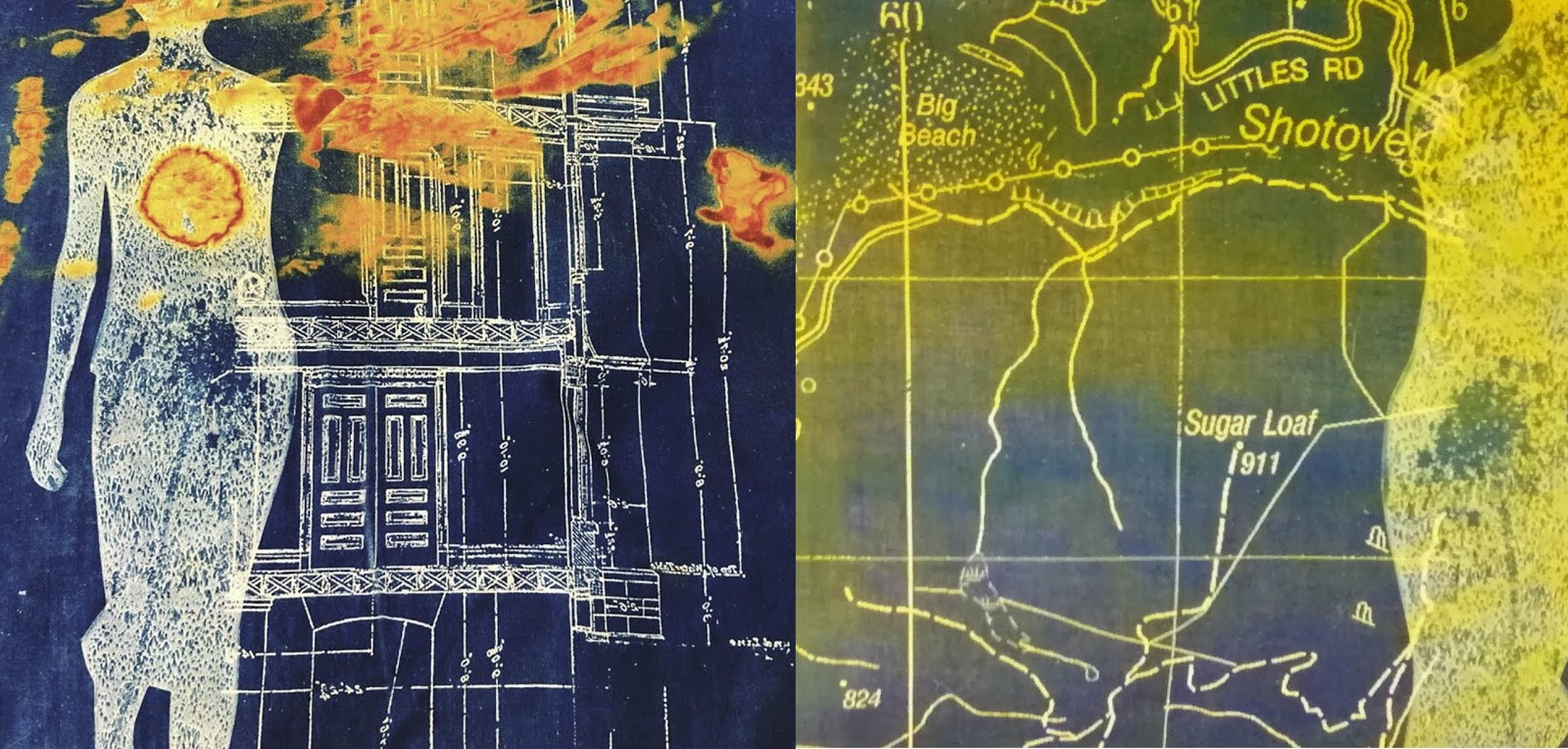
Technically we worked with process of gelli printing as a drawing process, cyanotype and photostencil screenprinting, primarily on textiles. Quite a swag for a 4 day workshop but we took over the well appointed Bannockburn Hall, created a darkroom and tapped into our  energy reserves. 


Mono screenprint by Pam and Gelli Print drawings by Alison and Lynn

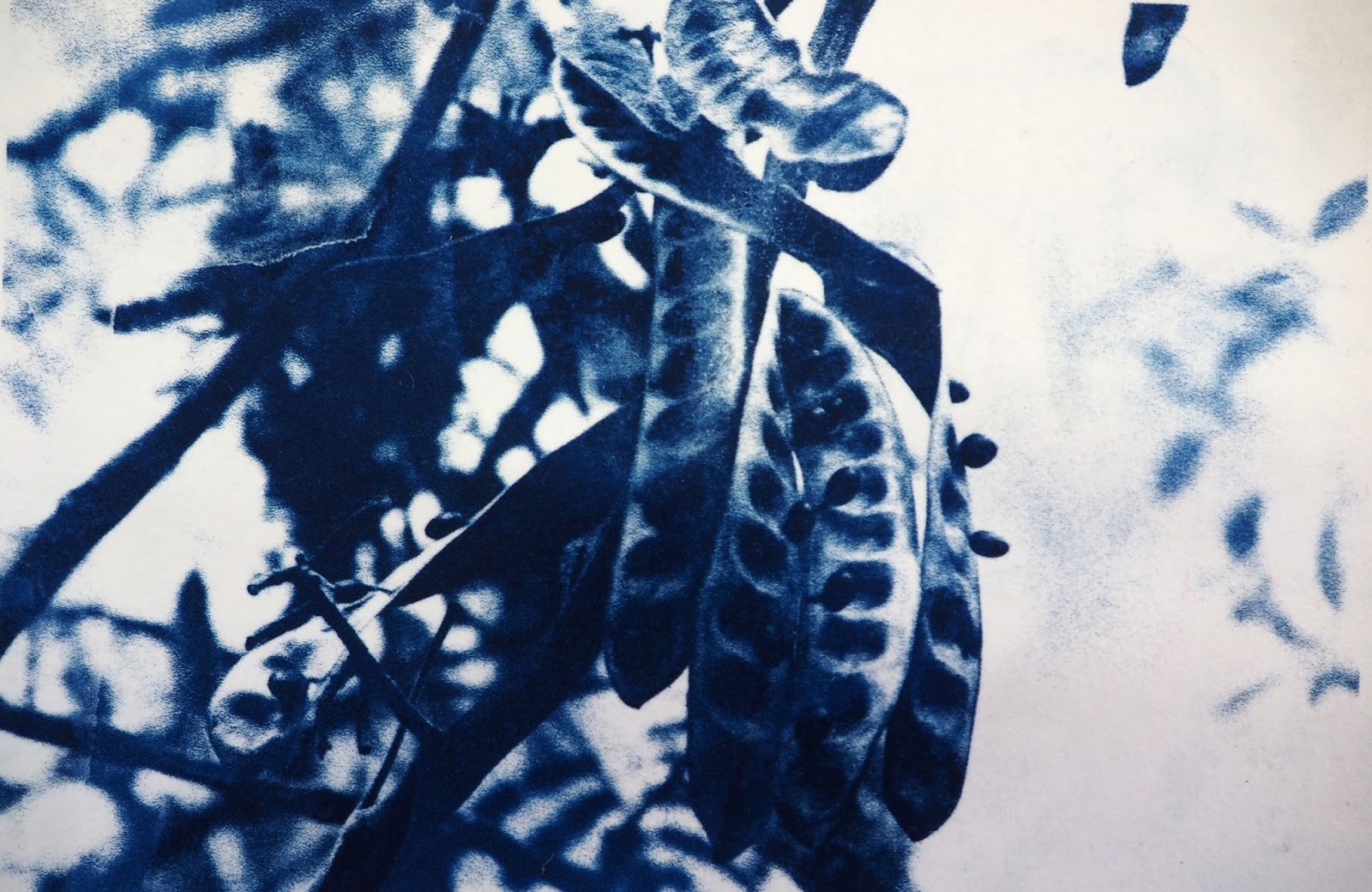
Cyanotype of trees from Robyn's house
Learning and working with three processes in a short time is not for the fainthearted. The creativity of combining the processes however was enormous , with many original and organic results emerging. I enjoy teaching when I cannot answer many questions, when the only way we can see if something will work is by trying it out. Wendy's stencils made out of transparency film got coated in paint and worked deliciously, blocking the light on her fabric cyanotypes. The combination of rust and coating previously dyed fabrics provided other levels of interference that was very successful. 

details of Wendy's textiles
Creating yardage for use in future projects was a goal for many. This fits with my approach of creating freely and editing afterwards. This goal was certainly achieved. Looking forward to seeing some of this work integrated into an upcoming exhibition the group are having at Central Stories Gallery in Alexandra. 

Ali's Home Series

A selection of Jenny's productivity
Janice worked with sheer silks, many eco dyed before over printing

Slivers of beauty from Robyn, Jeanette (know that tree?), Angela
(Stamping with  chopped up gelli plate) and Jeanette
To produce our image screens we coated 43T mesh screens with photostensitive emulsion, dried it and then exposed them under a 500 Watt Mercury Vapour UV Light. (Hanging off Gilbert's ever handy tripod) The imagery was drawn or photocopied onto transparency film and 'secured' onto the screen with a piece of 4mm glass to get good contact. Our little A4 screens fitted well under the lamp and took about a minute to expose. For the larger ones we did a one minute exposure on half and carefully slid the screen along and gave another minute on the other half. After wash out in warm water of the unhardened emulsion the screens were given a post exposure of ten minutes before use. This pop up exposure unit worked very well, I love my light as it is also useful for cyanotypes if the sunshine isn't playing ball. I got mine at https://www.ideal.co.n and while the light is an ok price the expensive bit is the fitting. :-( 

Angela  had some thermofax screens which proved very popular


Jeanette screening on silk fabrics to achieve overlay

One evening I forced people into an activity, making flowers

Working as an artist and arts facilitator requires a lot of planning and juggling that does not bring financial security but the creative results and friendships are meaningful rewards to me. I have been asked to give an informal talk to students on the way I sustain my career and I believe a lot of this comes down to networking and the sharing nature of people involved in the arts. O
ne workshop can lead to another, in this case I have been invited back to teach a design based workshop with COOTS in the future.  The thing that really sustains my practice is the gifting of resources that comes from my network. From this workshop (ok, ok a big plus was that the group fed me lots of wonderful food, but also...) Robyn gave me some wonderful old hand drawn maps that will be used in a future class. Wendy had a connection with a place I have always wanted to photograph, so getting permission becomes a possibility. Steve, a friend from another project, has 3-d printed me a printing press so I can print almost anywhere! https://openpressproject.com/  When I was at art school there was a quote on the wall about how we achieve more as team together than as individuals, so true. Thank you to everyone who has supported me!

Monday, June 19, 2017

Island Inspirations Weekend: Cyanotype Workshop


Over the weekend of 3rd and 4th of June Stewart Island locals and visitors came together for a Photography workshop with Graham Dainty http://www.photofiordland.co.nz/ and a Cyantoype workshop with me. We also enjoyed a fabulous shared meal and evening talks! 

Little bit of info: The cyanotype process for making prints was invented by Sir John Herschel in 1842 and came from his discovery of the light sensitivity of iron salts. It produces a deep indigo image (known as Prussian Blue), which can be printed onto many surfaces. English Botanist  Anna Atkins used the process for what is considered to be the first work with photographic illustrations, namely her Photographs of British Algae: Cyanotype Impressions (1843). 

Anna Atkins

A bit of problem solving and a broken window went on in
 order to find a way to print Janet's seaweed

Janet's large kelp print

Cyanotypes are also referred to as sunprints. There are different recipes, we used a traditional mixture using 2 solutions, a combination of Ammonium Ferric citrate (iron), Potassium ferricyanide and water.  The mixed solution was coated onto the paper in the dark with the help of red light torches (which were in abundance as used on the Island for Kiwi spotting), dried quickly with hair dryers, exposed to sunlight and washed to remove the unexposed chemistry. 

Heading off to teach away from home takes
a bit of organising, here's my scruffy list


Experimenting with different materials.


Zane and Sue plotting and planning whilst apparently
drinking meths.


Exposing prints in the sun

Lots of experimentation went on - using different mediums to block the light.


Shona: rubber stamping used as a light blocker,
printed onto silk organza
Tallis experimented with Indian ink on transparency.
 (Also, not shown, water droplets.)
Tallis's result: ink flicks combined
 with pen drawn image
Drawing with Sharpie pen on transparency


Jewellery and the ever popular onion bag


Hand drawn image, cyanotype print toned with tannin.
A dreamy pillowcase made by Annett
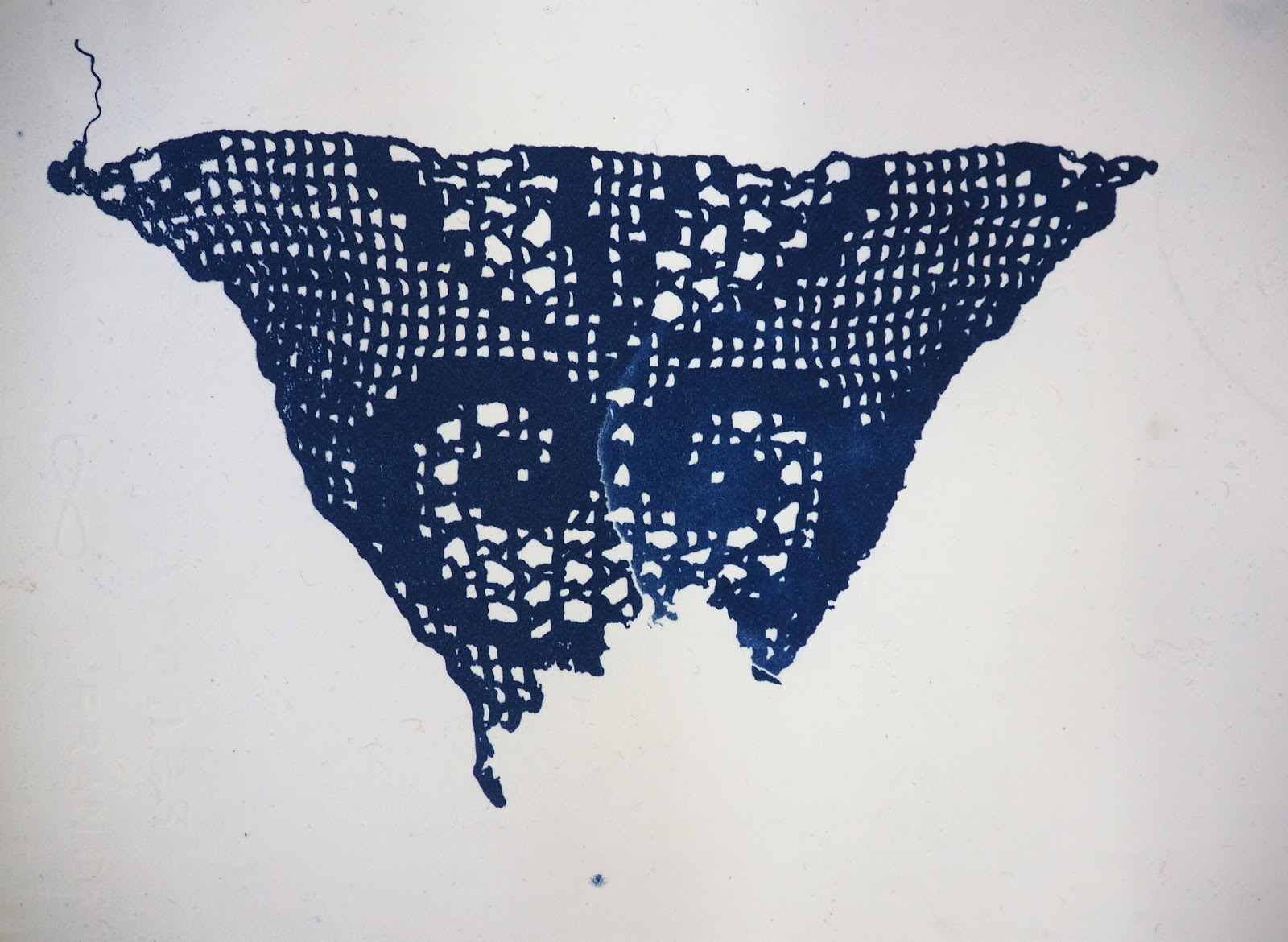
Pip's lace

Beautiful broken glass print - Janet.
Painted and exposed wood to show the grain
The remains on our coating boards looked good too
On day two we worked with digital negatives which required more experimentation with timing of exposures.


Digital negative


What a print looks like after exposure before being washed out.
Detail of Megan's work.

I have the cutest of friends.


Same negative, two different exposure times.
Longer in the light creates a darker image.
A side of Shona you might not have expected to see
Zane's photo, manipulated with a Photoshop filter then printed

Jo Learmonth organised some images from the Stewart Island Rakiura Museum for use for this project, applying the Creative Commons License. It was magical for me seeing these images from the past appear after exposure and washing out.


Labels from the Stewart Island Rakiura Museum printed by Pip


Megan, Janet, Shona, Sue, Annett, Pip, Sharon, Zane and Tallis you were an amazing class.

I find this a super useful reference site:  www.alternativephotography.com

The weekend was made better by significant help from the Photography Department @ Dunedin School of Art, where I  pre-coated some papers and the University of Otago. Thanks to Dave Warren, from the Chemistry Department, fellow cyanotype enthusiast Steve Ting from SciComm (who will be hosting an upcoming workshop at Otago Museum) and Tallis Lentz, our chief chemical mixer from the Chemistry Outreach Programme. 


Stewart Island put on a stunning departure morning.

Thanks to Stewart Island Promotions for organising this creative weekend - I hope there is a repeat next year.
http://www.stewartisland.co.nz/

Saturday, November 19, 2016

SciArt: Orokonui Halo Project with The Sandpit Collective

Some photos of process  - using art as a platform to encourage awareness and conversations around biodiversity and predator control.
HALO Project http://www.beyondorokonui.org.nz/news/92814fe6-042d-463f-be52-ef8c34ede15a